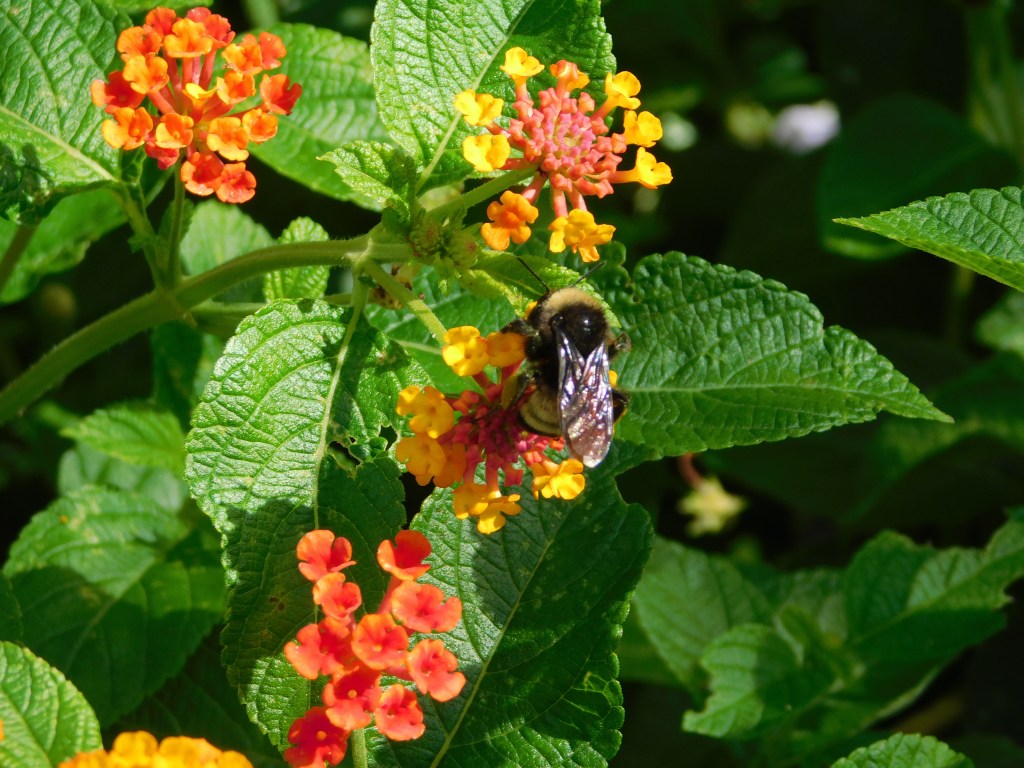
If bees only gathered nectar from perfect flowers, they wouldn’t be able to make even a single drop of honey. Matshona Dhliwayo
The bees have been very busy during the latter part of the summer. It seems as if they are working very hard to gather as much pollen as they can while the flowers are in bloom. They especially love the Morning Glory shrub, the Lantana bush, and the Rose of Sharon Hibiscus. The soft buzzing as they flit from bloom to bloom is mesmerizing. They are singular in their purpose, not even bothered as I lean in to pick a weed or water the plants around them.
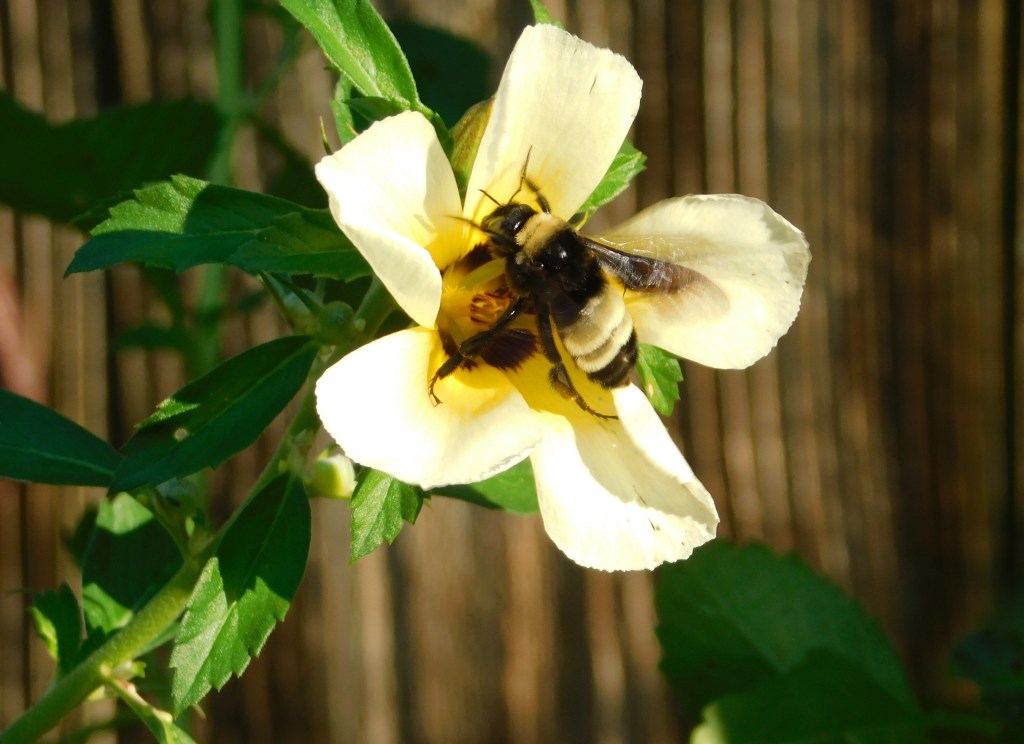
The bees love the Turnera, or White Buttercup flower.
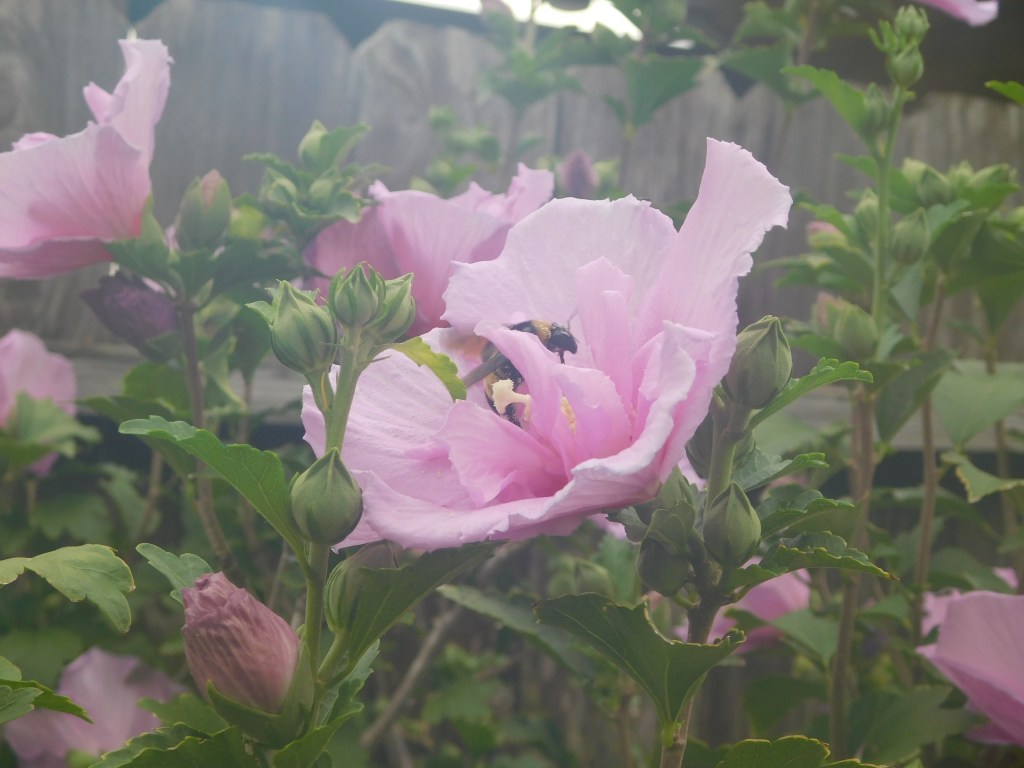
Here is a bumblebee in the Rose of Sharon Hibiscus.
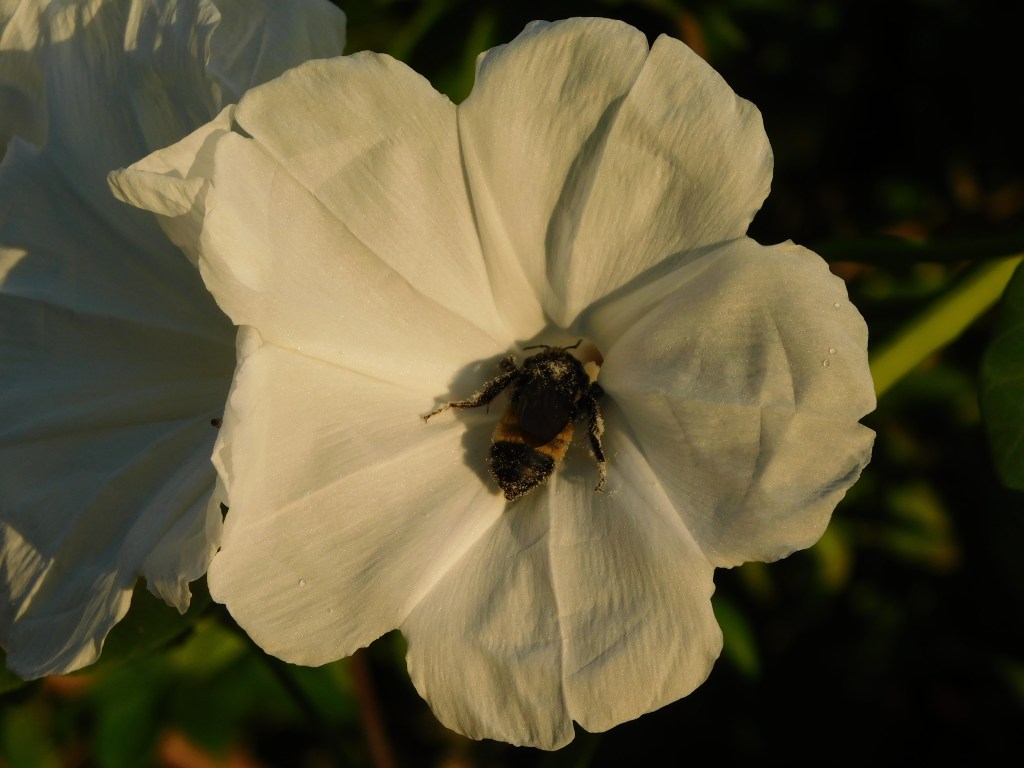
The Morning Glory bush offers huge blooms for the bees.
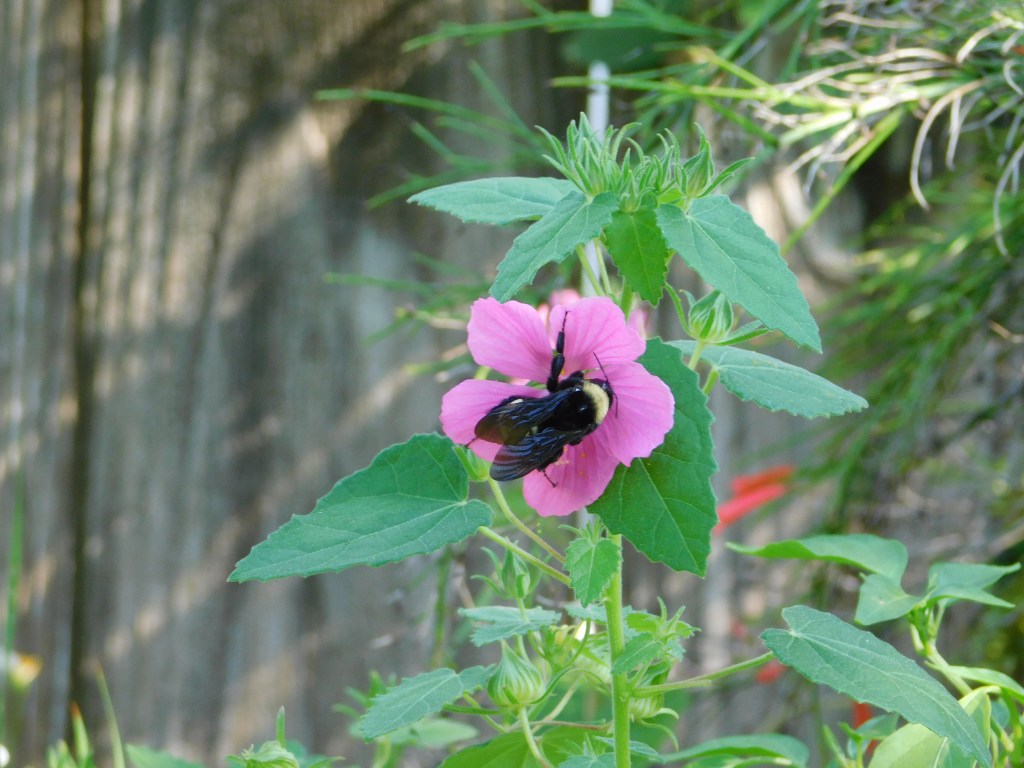
Rock Roses bloom all along the back fence. The bees spend a lot of time back there!
The bees have lots of branched hairs on their body which allow them to easily collect pollen as they travel from plant to plant. This is one of the ways they transfer pollen to plants and continue the fertilization process for plant reproduction. Many times the entire bottom half of their bodies are covered in pollen collected on their visits to flowers, often gathered as they go deep into the center of the flower.
The bees have a symbiotic relationship with flowers, as they rely on the nectar from flowers for energy and the pollen for protein and fat, and the plants rely on the bumblebees for fertilization. Some plants are buzz-pollinated and rely on the “buzz” from the bumblebee to release the pollen. This relationship provides the perfect environment for the cross-pollination of many plants. We need the bumblebees!

 The Quiet Wild Blog
Leave a comment